What this may mean
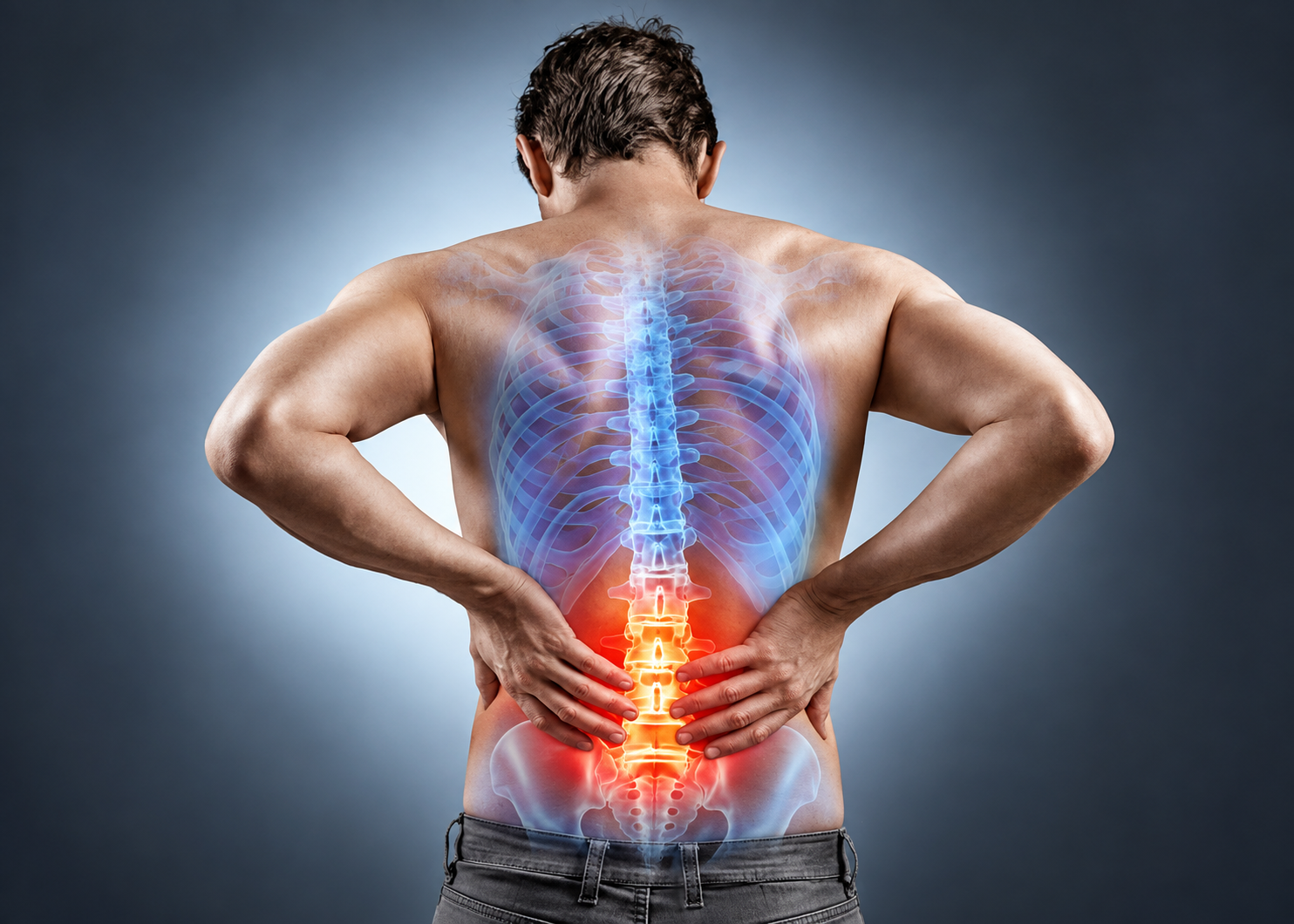
Lower-back discomfort is common and can involve muscles, joints, discs, nerves, or a combination of factors. The location, triggers, duration, and associated symptoms help a qualified professional understand what may be contributing.
The same symptom can have different causes. Location, timing, triggers, physical examination, health history, and sometimes imaging or laboratory testing help a qualified professional decide what is relevant.
Common experiences
- Aching or tightness
- Discomfort after lifting or prolonged sitting
- Limited movement
- Symptoms that spread into a buttock or leg
- Muscle spasm
Not every person experiences all of these patterns, and the presence of a symptom does not confirm a specific diagnosis.
Possible contributing factors
- Muscle or ligament strain
- Joint or disc changes
- Nerve irritation
- Prolonged posture
- Physical workload or deconditioning
When to speak with a healthcare professional
Consider a professional evaluation when symptoms persist, repeatedly return, interfere with sleep or everyday tasks, follow an injury, or include numbness, tingling, swelling, or weakness. A clinician can assess the pattern in the context of your complete health history.
General daily habits
Depending on the cause and professional guidance, people may benefit from pacing demanding activities, changing positions regularly, maintaining comfortable movement, supporting sleep, and reviewing workplace or lifting habits. These general ideas are not a substitute for a personal care plan.
Explore our product formats
ARTRO FLEX and ARTI FLEX are wellness products with different formats. Review the labels, ingredients, directions, and warnings to decide whether either format is appropriate for your routine. Neither product is intended to diagnose, treat, cure, or prevent the topic described on this page.
Compare the Solutions